This Series is designed to deliver practical, expert-driven insights into the world of geomembranes and geosynthetics. Whether you’re an engineer, project manager, or environmental specialist, this Series will equip you with valuable knowledge and update you on the latest industry advancements.
Stormwater Impacts: Challenges for Urban Development
Protecting Water Quality
Written by Brian Fraser, Layfield Geosynthetics
Stormwater is indeed a major challenge for urban communities, due to increased flooding risks, water pollution, and the disruption of the natural water cycle caused by the addition of impervious surfaces such as roads and rooftops.
Stormwater is rainwater or snowmelt that runs off surfaces, such as streets, roofs, and yards, picking up pollutants like oil, chemicals, and debris. It can infiltrate into soil to recharge groundwater, evaporate, or collect in ponds and puddles. Most runoff, however, flows untreated into storm drains, rivers, lakes, wetlands, and oceans.
Urban stormwater can contain a complex mix of contaminants, including:
- Hydrocarbons (oil, gas, grease)

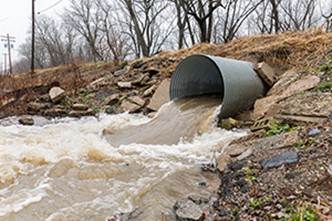
Conventional method of stormwater release using culverts - Heavy metals (lead, zinc)
- Nutrients (nitrogen, phosphorus)
- Pesticides and herbicides
- Bacteria and pathogens
- Road salt & chemicals
- Emerging pollutants (microplastics, pharmaceuticals)
Stormwater Impacts
These pollutants originate from impervious surfaces, such as roads, parking lots, and rooftops, leading to significant flooding, erosion, and damage to infrastructure and the ecosystem. Managing the quantity and quality of stormwater is critical to protect against the challenges noted above.
Traditional Stormwater Containment Methods
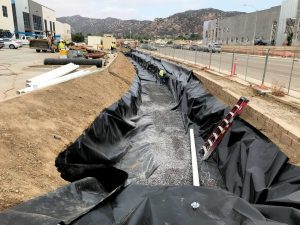
- Piped Drainage Systems: Underground pipes and gutters quickly convey runoff to discharge points.
- Dry Ponds (Detention Basins): Temporarily store stormwater and release it slowly to reduce flooding.
- Wet Ponds (Retention Basins): Maintain a permanent water pool for settling and biological treatment.
- Bioswales / Infiltration Trenches: Underground stone-filled excavations allow gradual infiltration.
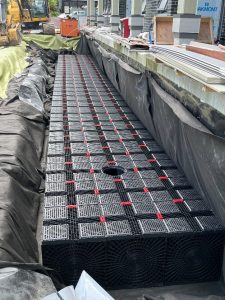
Modular Underground Stormwater Systems
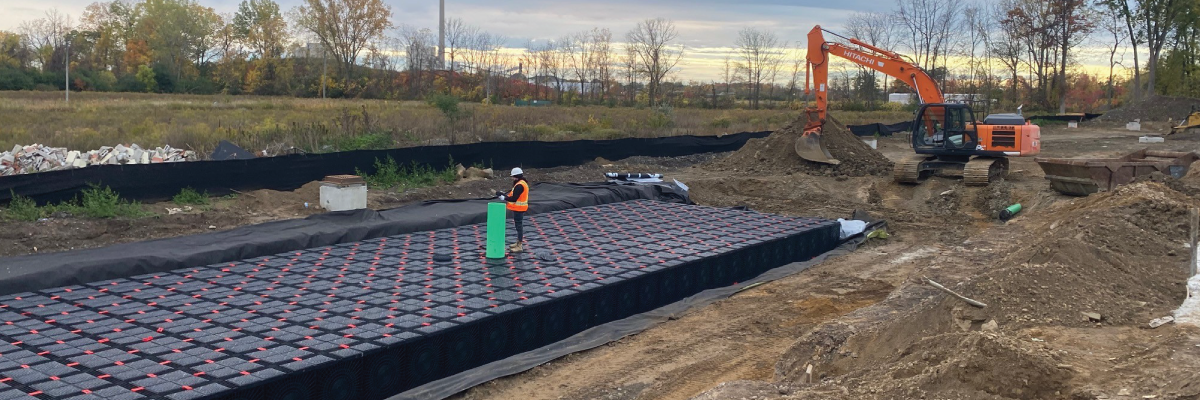
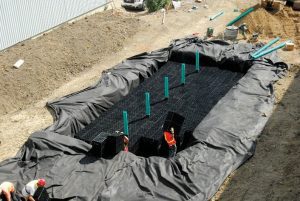
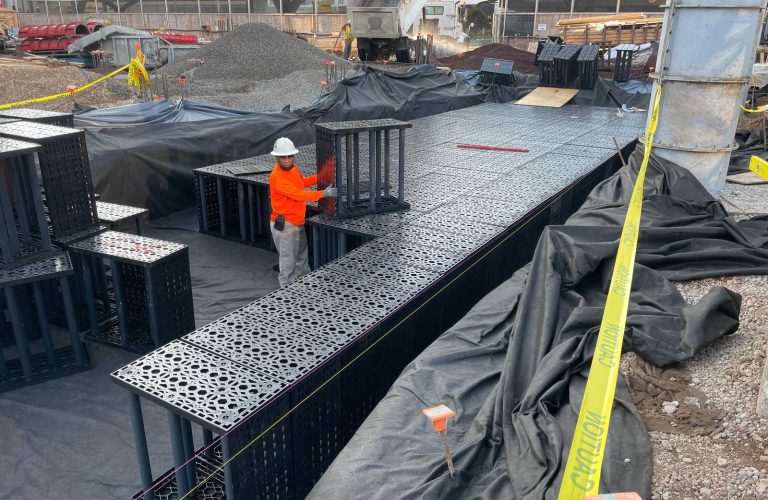
Modern solutions are increasingly utilizing interlocking high-strength plastic modules installed beneath surfaces, such as parking lots. These systems store stormwater temporarily, then release it slowly or allow infiltration, providing space-efficient and sustainable water management. These systems are normally designed for stormwater retention and infiltration. Stormwater retention keeps water on-site long-term (permanently or for reuse), often using liners, while infiltration is the process of water soaking into the ground, recharging groundwater through permeable soils or stone, with retention systems sometimes built to facilitate infiltration (such as infiltration basins) or block it (like wet ponds).
The key difference: Retention stores water (temporarily or permanently); infiltration moves water into the soil.
How They Work
- Collection: Runoff enters catch basins and flows into underground modules.
- Storage: Modules create large void spaces for temporary water storage.
- Release/Infiltration: Controlled outlets discharge water slowly, allowing for soil infiltration.
Key Benefits
- Space Efficiency: Installed under roads, parks, and parking lots.
- Flood Control: Reduces peak flows and downstream flooding.
- Sustainability: Supports Low Impact Development techniques, including groundwater recharge.
- Durability: High-strength materials can withstand heavy traffic loads.
- Fast Installation: Quicker than traditional ponds or concrete tanks.
- Cost-Effective: Typically, less expensive than concrete tanks.
Common Applications
- Beneath parking lots, roadways, athletic fields, and green spaces
- Residential, commercial, and industrial developments
- Integrated with green infrastructure
Layfield Solutions
Layfield delivers advanced stormwater management systems tailored for urban environments, integrating geosynthetics with modular technology to provide efficient, sustainable, and resilient solutions. Our offerings include bioswale geomembranes and stormwater retention and infiltration systems, all manufactured to the highest quality standards in the United States, Canada, and Europe. Our bundle of geosynthetics supporting stormwater includes modular stormwater tanks, flexible geomembranes, geotextiles, geogrids, erosion and sediment control products, along with any installation services that may be required or requested.
For more information on our products, or to learn more about the highest quality systems available, bundled with our complete line of geosynthetics, ensuring durability, performance, and long-term value. Ask an Expert!




Related Articles
View All News