This Series is designed to deliver practical, expert-driven insights into the world of geomembranes and geosynthetics. Whether you’re an engineer, project manager, or environmental specialist, this Series will equip you with valuable knowledge and update you on the latest industry advancements.
Protecting Water with Geomembrane Floating Covers
Protecting Water Quality
Written by Brian Fraser, Layfield Geosynthetics
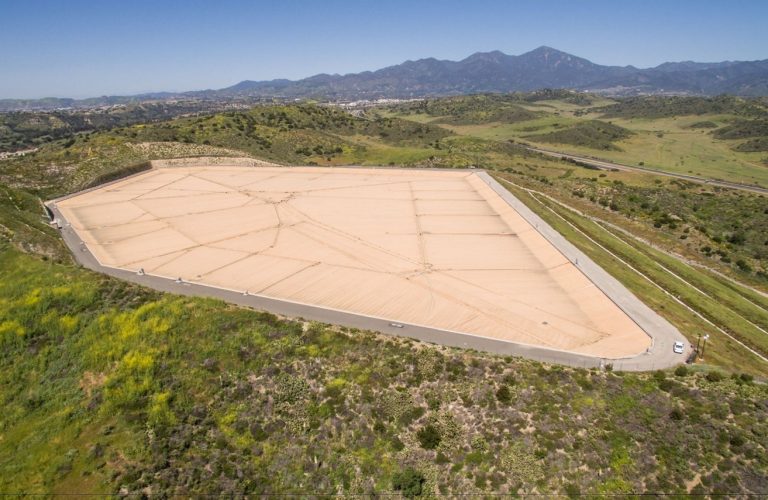
Geomembrane floating covers are increasingly used to protect our water supplies as global demand rises and water scarcity intensifies. Nearly half of the world’s population now faces severe water scarcity for part of each year, and global freshwater demand continues to grow at just under 1% annually, driven by urbanization and expanding municipal needs. Climate pressures worsen these conditions, with 2024 recorded as the hottest year to date.
Evaporation further reduces available water. Studies estimate that lakes and reservoirs lose roughly 1,500 km³ of water each year, equivalent to about three Lake Eries through evaporation. In many southern U.S. states such as Texas, Arizona, Nevada, Utah, and California, evaporation rates commonly range from 80 to 140 inches per year (2 to 3.5 metres), representing a major loss of freshwater.
As these challenges escalate, geomembrane floating covers are increasingly adopted to reduce evaporation by creating a continuous barrier over the water surface, limiting air‑water interaction. They also block sunlight, suppress algae, reduce odors, improve water quality, and protect against contamination. Floating covers remain one of the most reliable and economical methods of storing and safeguarding large water volumes, often costing less than half the price of above‑ground steel tanks or underground concrete reservoirs. They are widely installed for municipal storages from 1.5 million to over 500 million gallons (5.6 million to 1.9 billion liters).
Types of Geosynthetic Floating Covers
Floating cover systems vary by function, reservoir type, and operational requirements. Common designs include:
1. Defined Sump Floating Covers
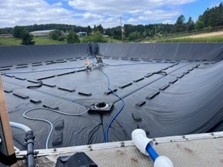
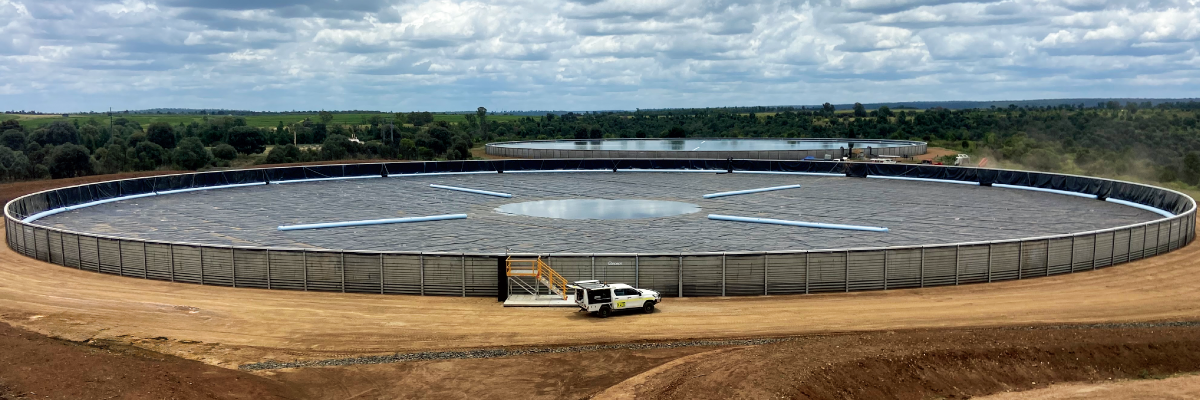
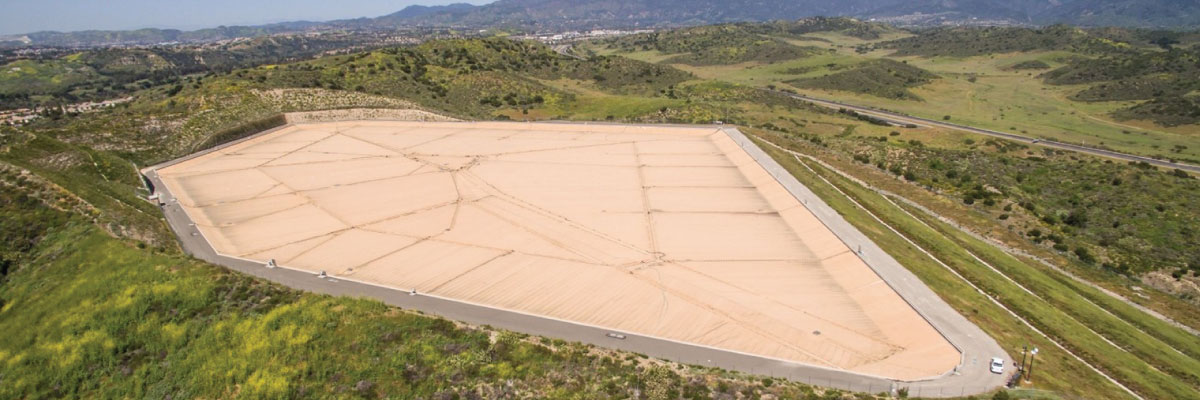
Engineered to rest directly on the water surface, defined sump covers use a combination of ballast weights and floats to maintain membrane tension. This weight-design allows the system to adjust to fluctuating water levels while maintaining full coverage. These covers are used for evaporation control, containment, and odor management in ponds, tanks, and reservoirs. For long term floating cover applications, HypaFlex® CSPE remains the industry gold standard material. HypaFlex® CSPE has been used for over 50 years in fresh and potable water storages and can come with a 30-year material weathering warranty.
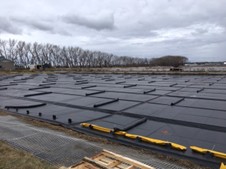
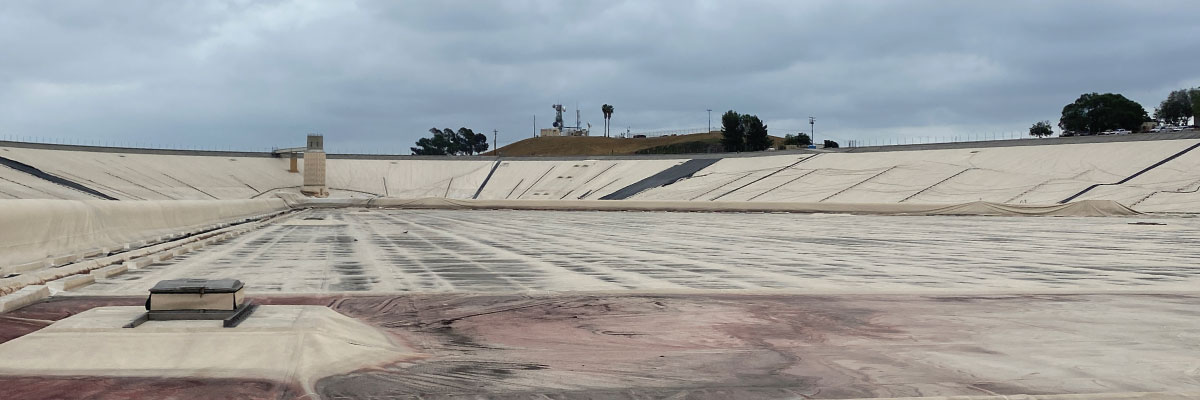
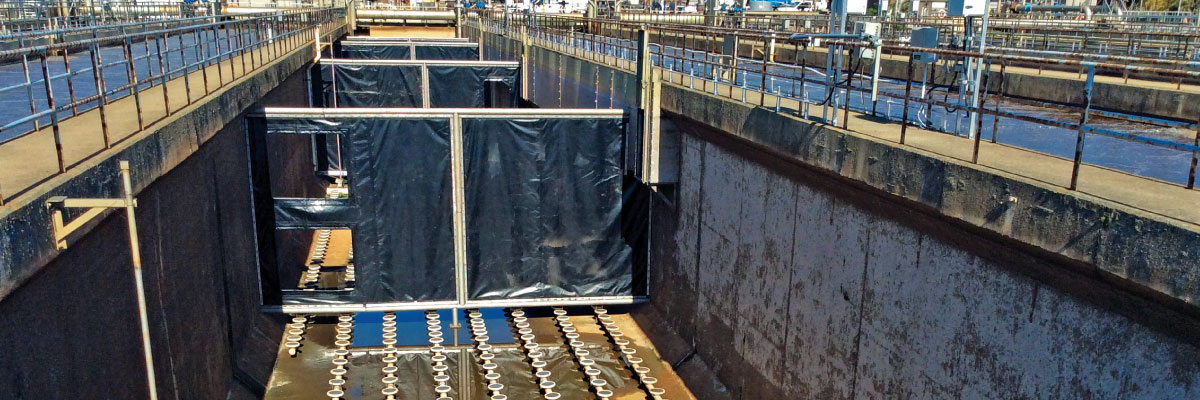
Modular insulated covers are commonly deployed in wastewater treatment and colder‑climate applications. Constructed from non‑absorbing foam encapsulated in a geomembrane, they help retain heat to support biological activity, improving reductions in Total Suspended Solids, Biological and Chemical Oxygen Demand for municipal secondary wastewater treatment. They are also used in warmer climates for fresh and potable water containment to help insulate the water, block UV light to limit algae buildup, and prevent evaporation losses.
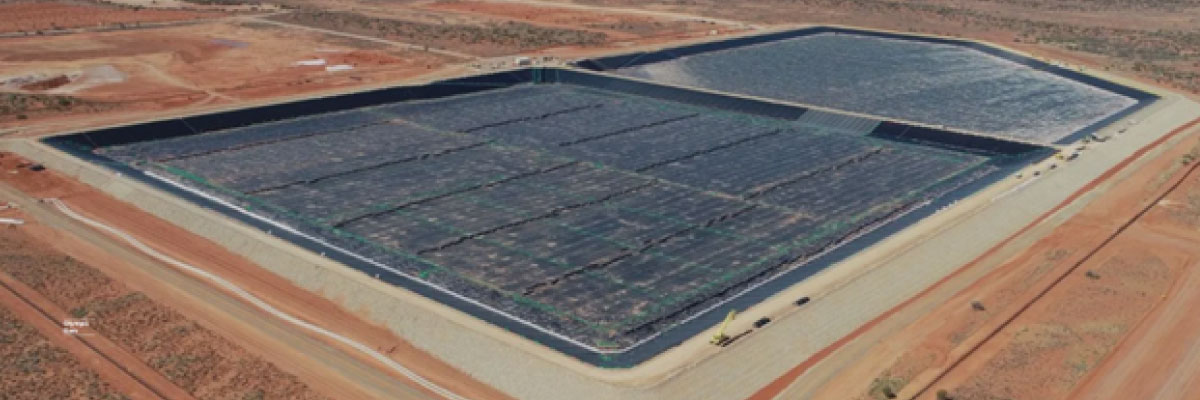
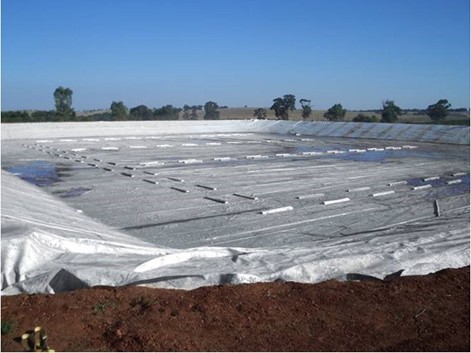
These lightweight, cost‑effective cover systems are designed for short-term or temporary use, particularly in oil and gas, agricultural ponds, and short‑duration storage applications. These applications normally require a 5 to 10-year service life of the cover. These systems may include more economically designed tensioned trough-style covers or cable‑supported designs.
Benefits of Floating Covers
Water Conservation
Significantly reduces evaporation losses, preserving water resources in drought‑prone and high‑evaporation regions.
Water Quality Protection
Help limit algae growth, minimize odors, reduce debris, and lower disinfectant requirements. The controlled environment supports more consistent water chemistry and reduces treatment frequency.
Cost Efficiency
Floating covers can be considerably more economical than alternative methods of storage, including steel above-ground tanks, underground concrete reservoirs, and clearwells for larger‑volume storage.
Layfield Solutions
Layfield Geosynthetics, with over 48 years of experience, is recognized as the leading industry supplier of geomembranes and floating covers, providing design support, in-house fabrication, and full construction & installation services. Contact Layfield today for further information on the advantages and types of our floating cover systems.
For more information on our products, or to learn more about the highest quality systems available, bundled with our complete line of geosynthetics, ensuring durability, performance, and long-term value. Ask an Expert!
Related Articles
View All News