Introduction
Sustainability is no longer a future goal in packaging, it is shaping decisions today. Across North America and globally, brand owners are under pressure to move toward packaging that aligns with recycling systems, regulatory requirements, and consumer expectations. One of the most talked-about solutions is mono-material flexible packaging.
At its core, mono-material packaging is designed primarily from a single polymer family, most often polyethylene (PE) or polypropylene (PP). This simplifies recycling and supports circularity goals, but it also introduces tradeoffs. Understanding both sides is critical before making the shift.
Why Mono-Material Packaging Is Gaining Momentum
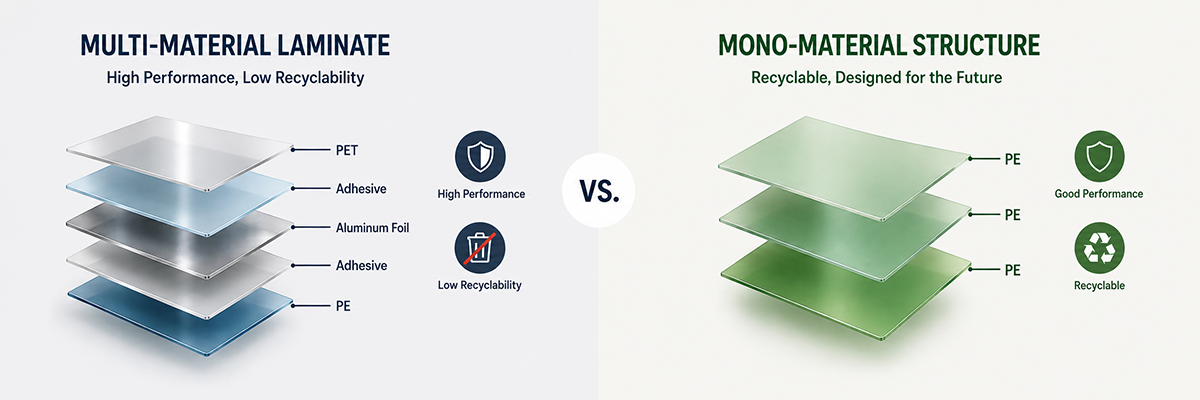
Traditional flexible packaging relies on multi-material laminates (PET, aluminum, PE) to deliver performance. These structures are highly effective but extremely difficult to recycle due to incompatible layers.
Mono-material packaging simplifies structures so they can better align with existing recycling systems, improving recovery potential and helping brands meet evolving regulatory expectations.
Key Advantages for Brand Owners
• Improved recyclability and alignment with mechanical recycling streams
• Easier compliance with EPR and recyclability guidelines
• Reduced material complexity and clearer specifications
• Stronger, more defensible sustainability messaging
The Reality: Why Multi-Material Still Exists
Multi-material laminates became standard because they combine strengths: barrier protection, seal performance, stiffness, and print quality. Replacing these combined functions with a single material is possible but not always straightforward.
Where Mono-Material Performs Well
Mono-material structures work best in applications with moderate barrier needs:
• Dry foods and snacks
• Frozen foods
• Household and personal care products
• Refill and e-commerce packaging
Where Tradeoffs Start to Show
• Reduced barrier performance for oxygen- or aroma-sensitive products
• Potential shelf-life impact if protection is insufficient
• Differences in machinability and sealing behavior
• Changes in packaging aesthetics and rigidity
The Role of Innovation
Advances in polymer science, like oriented PE films and specialty coatings, are closing the gap between mono-material and traditional laminates. However, successful implementation requires careful design and validation.
What Brand Owners Should Evaluate
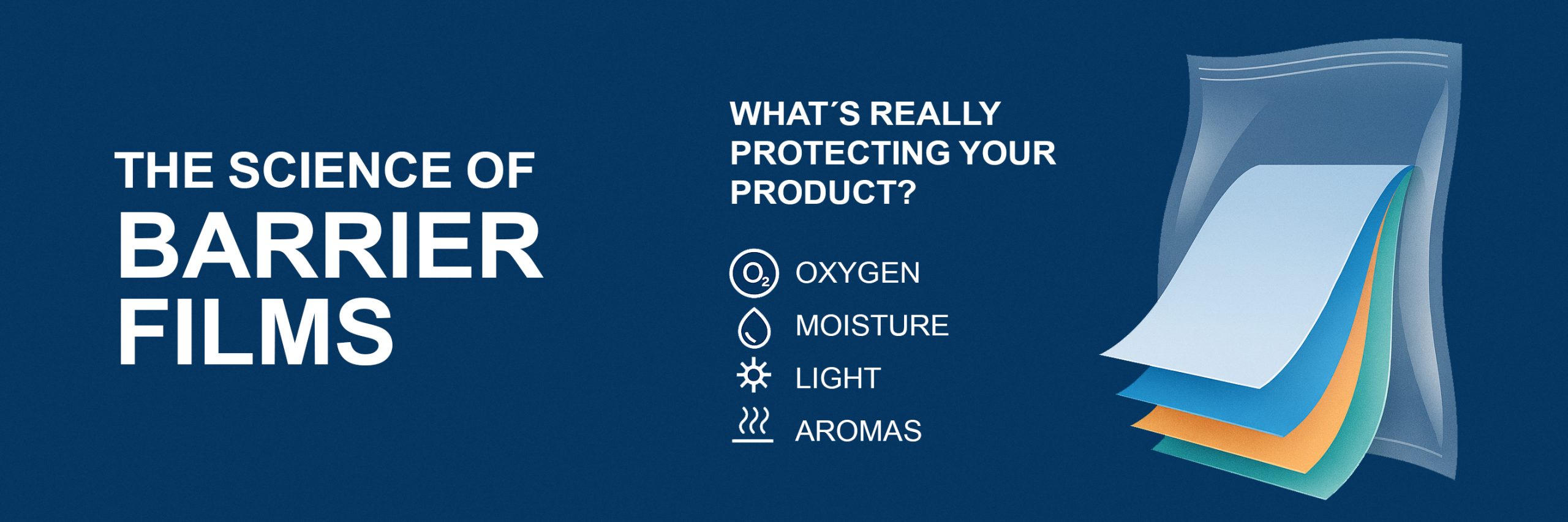
• Product sensitivity (oxygen, moisture, light)
• Shelf-life requirements
• Equipment compatibility
• Consumer usability and shelf presence
• Local recycling infrastructure
Where Layfield Fits
At Layfield Flexible Films, we help brands evaluate when mono-material makes sense and design solutions that balance performance with recyclability. This includes film structure optimization, machinability testing, and barrier validation.
Final Thoughts
Mono-material packaging is an important step forward but not a universal solution. The best outcomes come from strategic decisions that balance sustainability with real-world performance.
Related Articles
View All News